| ||||||||||||||||||||||||||||||||||||||
| 统 |
|
 Hanzi-Trainer |
||||||||||||||||||||||||||||||||||||
| ||||||||||||||||||||||||||||||||||||||
Significado
 context, to gather, to unite, whole 
| ||||||||||||||||||||||||||||||||||||||
Pronunciación
|
tǒng | |||||||||||||||||||||||||||||||||||||
Explicación |
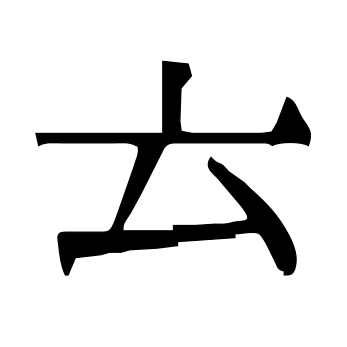
Izquierda: enhebrar 纟/糸, derecha: satisfacer, llenar 充 (El recién nacido  [= niño 子 boca abajo, porque viene con la cabeza primero] forcejea con las piernas 儿 para ser 'llenado' [= alimentado] y así quedar satisfecho. (cf.流) [= niño 子 boca abajo, porque viene con la cabeza primero] forcejea con las piernas 儿 para ser 'llenado' [= alimentado] y así quedar satisfecho. (cf.流) Left: thread 纟/糸, right: satisfy, to fill 充 (The newborn baby  [= child 子 upside down, because it comes with the head first] flounders with his legs 儿 to be 'filled' [= fed] and thus be satisfied. (cf.流) [= child 子 upside down, because it comes with the head first] flounders with his legs 儿 to be 'filled' [= fed] and thus be satisfied. (cf.流) | |||||||||||||||||||||||||||||||||||||
|
Los hilos son satisfactorios si están en un contexto. (es decir, tejidos) Threads are satisfying if they are in a context. (i.e. woven) | |||||||||||||||||||||||||||||||||||||
Radicales
| ||||||||||||||||||||||||||||||||||||||
Vocabulario
| ||||||||||||||||||||||||||||||||||||||




| tǒng yī | unificar; unir; integrar | |
| lǒng tǒng | general; amplio; en términos generales; hablando ampliamente | |
| tǒng shuài | mandar; comandante en jefe | |
| tǒng shuài | ||
| 统一战线 | tǒng yī zhàn xiàn | frente unido |
| chuán tǒng | tradición; tradicional; convención; convencional | |
| tǒng zhì | gobernar (un país); gobernar; regir; régimen | |
| tǒng jì | estadística; contar; sumar | |
| tǒng jì | ||
| zǒng tǒng | presidente (de un país) | |
| xì tǒng | sistema | |
| xì tǒng |
Lista de los carácters | Lista de los radicales