| |||||||||||||||||
| 塘 |
|
 Hanzi-Trainer |
|||||||||||||||
| |||||||||||||||||
Signification
 dyke, embankment, pool or pond, hot-water bathing pool 
| |||||||||||||||||
Prononciation
|
táng | ||||||||||||||||
Explication |
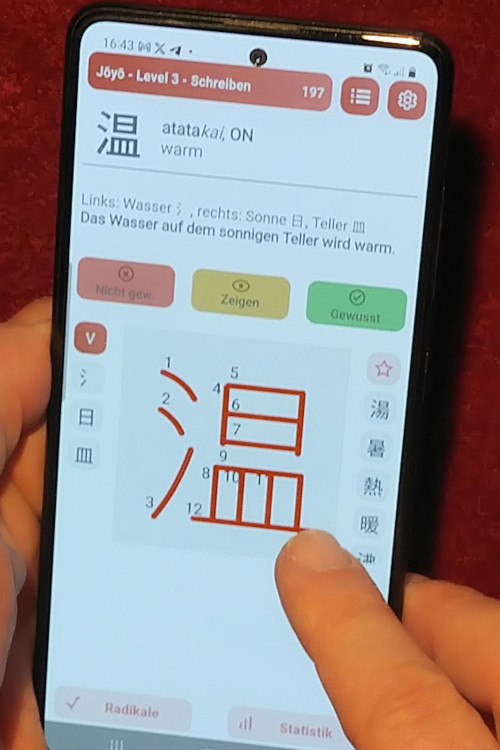
À gauche: terre 土, à droite: dynastie Tang 唐 (dans le bâtiment 广, la main  avec un pilon 丨 et un mortier 口 pendant la dynastie Tang) avec un pilon 丨 et un mortier 口 pendant la dynastie Tang) Left: earth 土, right: Tang dynasty 唐 (In the building 广 the hand  with pestle 丨 and mortar 口 during Tang) with pestle 丨 and mortar 口 during Tang) | ||||||||||||||||
|
Si la terre est compactée à la main et avec un pilon 丨 pendant la construction du bâtiment de manière à créer un cadre 口 autour, cela forme la digue d'un étang. If the earth is compacted by hand and pestle 丨 during the construction of the building so that a surrounding frame 口 is created, this is the dyke for an pond.
| ||||||||||||||||
Radicaux
| |||||||||||||||||
Vocabulaire
| |||||||||||||||||



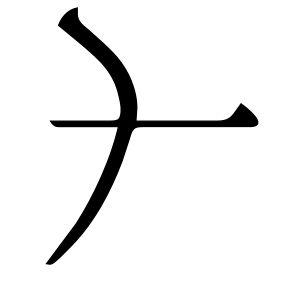

| chí táng | piscine ; étang | |
| chí táng | ||
| chí táng |
Liste des caractères | Liste des radicaux