Memory phrase for the character: 固

固

Hanzi-Trainer
 
Meaning hard, strong, solid, undoubtedly
Pronunciation
gù

Explanation

Outside frame 囗, but here: mouth 口, inside: old 古 (= tomb stone). [Some things like the meat of old animals or full-grown vegetable becomes hard with age.]
Mnemonic
 
In the mouth old things taste: hard. [In contrast: In the mouth 口 have young things (= this is "not yet 未") a special taste 味]

Radicals
固 hard, strong
囗 enclosureThis radical is enclosing other items. A small square 口 however is understood as mouth.
口 mouth, openingThis is a small square. If it is bigger: 囗, it is an enclosure.
古 ancient, old, formerOriginally derived from the picture of a skull, hence "old". But the idea of a burial mound is also helpful.


 Vocabulary

固然 gù rán  admittedly (it's true that...)
根深蒂固 gēn shēn dì gù  deep-rooted (problem etc)
稳固 wěn gù  stable; steady; firm
凝固 níng gù  to freeze; to solidify; to congeal; fig. with rapt attention
固化 gù huà  to solidify; solidification (chemistry)
牢固 láo gù  firm; secure
固有 gù yǒu  intrinsic to sth; inherent; native
顽固 wán gù  stubborn; obstinate
巩固 gǒng gù  to consolidate; consolidation; to strengthen
固定资产 gù dìng zī chǎn  fixed assets
固体 gù tǐ  solid

At the page you get the memory phrases for learning the Chinese Hanzi. If you are learning the Japanese kanji, please follow this link.

List of the characters | List of the radicals
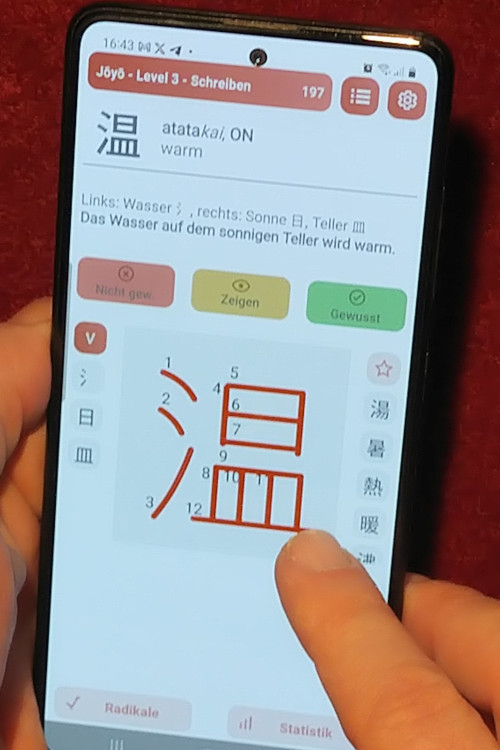
Get the app of the Hanzi-Trainer!

The iOS or Android apps have many other functions, such as character selection according to difficulty, practice programs, handwriting recognition and success statistics!

To the Trainer


Enhanced Learning Opportunities with the HTML Browser App

The browser version includes improved search options for radicals, the ability to create your own character lists, the option to select learning content based on the lessons in your textbook, and much more.